


Music you can watch
Pulse listens to whatever is playing on your computer, a stream, a playlist, a game or a DJ set, and turns it into moving light in real time. No setup, no plugins: start the app, pick a mode, press play.
Every mode is a shader, not a video. It is rendered on the graphics card, frame by frame, and reacts to the kick, the bass line and the hi-hats separately. It stays sharp on a laptop screen, a 4K TV or a projector in a club.
Pulse runs as a desktop app for Windows, macOS and Linux and as a web app in the browser. The base app is free.
- Modes
- 60
- Modes
- Categories
- 6
- Categories
- Palettes
- 10
- Palettes
- Transitions
- 12
- Transitions
Six worlds of light
From liquid metal to retro arcades: every mode is built by hand and tuned to the music. Hover a category to see it move.
Signature
Studio-lit crystals, lasers and rings. Only in Pulse.
Organic
Ferrofluid, ink, jellyfish and cells that breathe with the bass.
Particles
Galaxies, vortices and streams of a million points of light.
Ambient
Calm and wide. Auroras and tunnels for long evenings.
Line Art
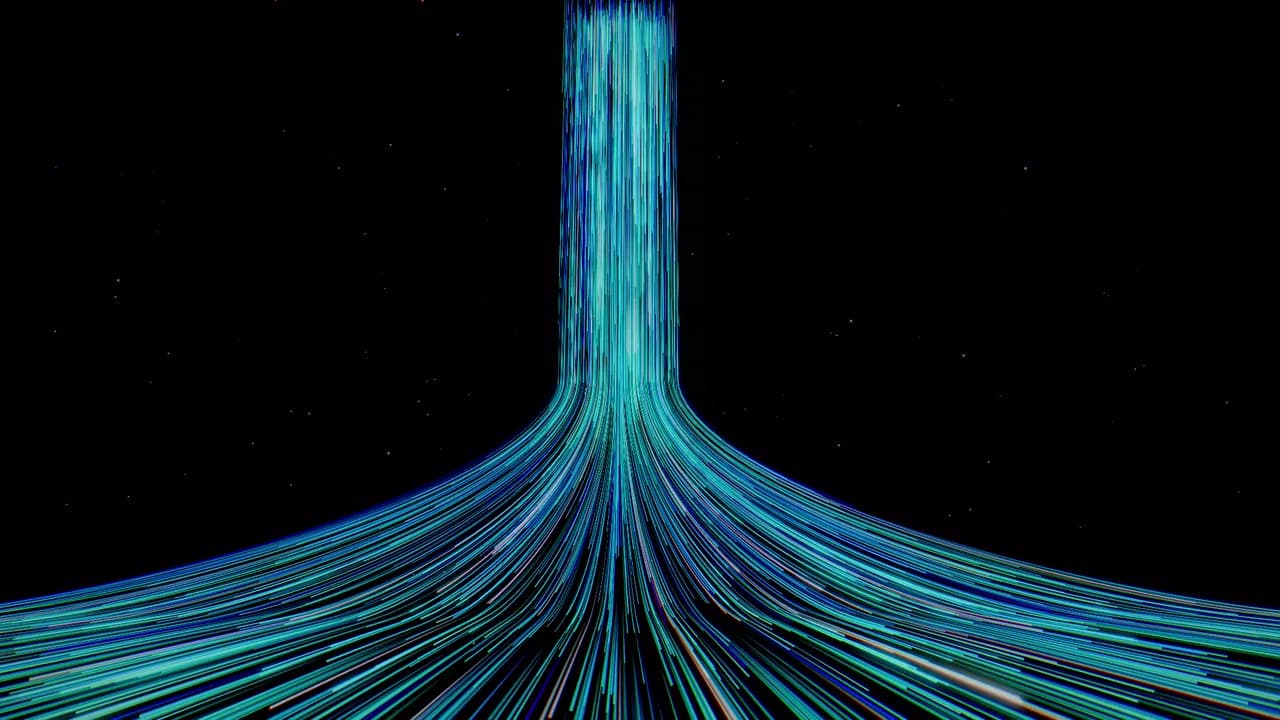
Thousands of hair-thin lines that shimmer with every note.
Retro
Outrun sunsets, phosphor scopes, VFD displays and arcade cabinets.
Plays along with anything
Any audio source
System audio straight from the desktop, the microphone, a file or a shared browser tab. On Windows, Pulse also shows the current track and cover.
A mode browser that stays out of the way
Press M, search, preview and switch. Pulse blends from one mode to the next with one of twelve transitions that fit the category.
Playlists for long nights
Collect your favorite modes, set how long each one plays and let Pulse switch on the beat. Fullscreen on a second monitor, controls on the first.
Built like a game engine
A native Rust core, a GPU render engine and a React interface, cleanly separated from each other.
GPU render engine
Every mode is a real-time shader on the graphics card, rendered in high dynamic range with cinematic post-processing.
Real-time audio analysis
A custom signal pipeline splits the music into frequency bands and detects beats and tempo with minimal latency.
Native audio capture
The Rust core taps system audio through each platform’s native audio interface and streams it straight to the renderer.
Lightweight cross-platform shell
Tauri and Rust instead of a bundled browser: one codebase for Windows, macOS, Linux and the web, with small installers.
Modular mode system
Modes are self-contained modules loaded on demand. New ones install at runtime as cryptographically signed packages.
Automated release pipeline
CI builds, signs and publishes every release for all platforms and delivers it as an in-app update.
Straight from the app
Turn up the music
Free for Windows, macOS and Linux, and as a web app in the browser.
Source code on GitHub